

Look, I'm gonna be straight with you, running a trucking business without tracking your numbers is like driving with your eyes closed. You might make it down the road for a bit, but eventually, you're gonna hit something. Hard.
Here's the thing: most owner-operators I talk to think they're making money. They've got loads coming in, fuel in the tank, and money hitting their bank account. Feels like success, right? But when we sit down and actually look at the numbers with a proper trucking profit and loss spreadsheet, the reality check hits different. Suddenly, that $8,000 gross week turns into a $1,200 net week after you account for everything.
That's why we're talking about this today, because knowing exactly where your money goes isn't just good bookkeeping. It's the difference between building wealth and just keeping your head above water.
What Exactly Is a Trucking Profit and Loss Spreadsheet?
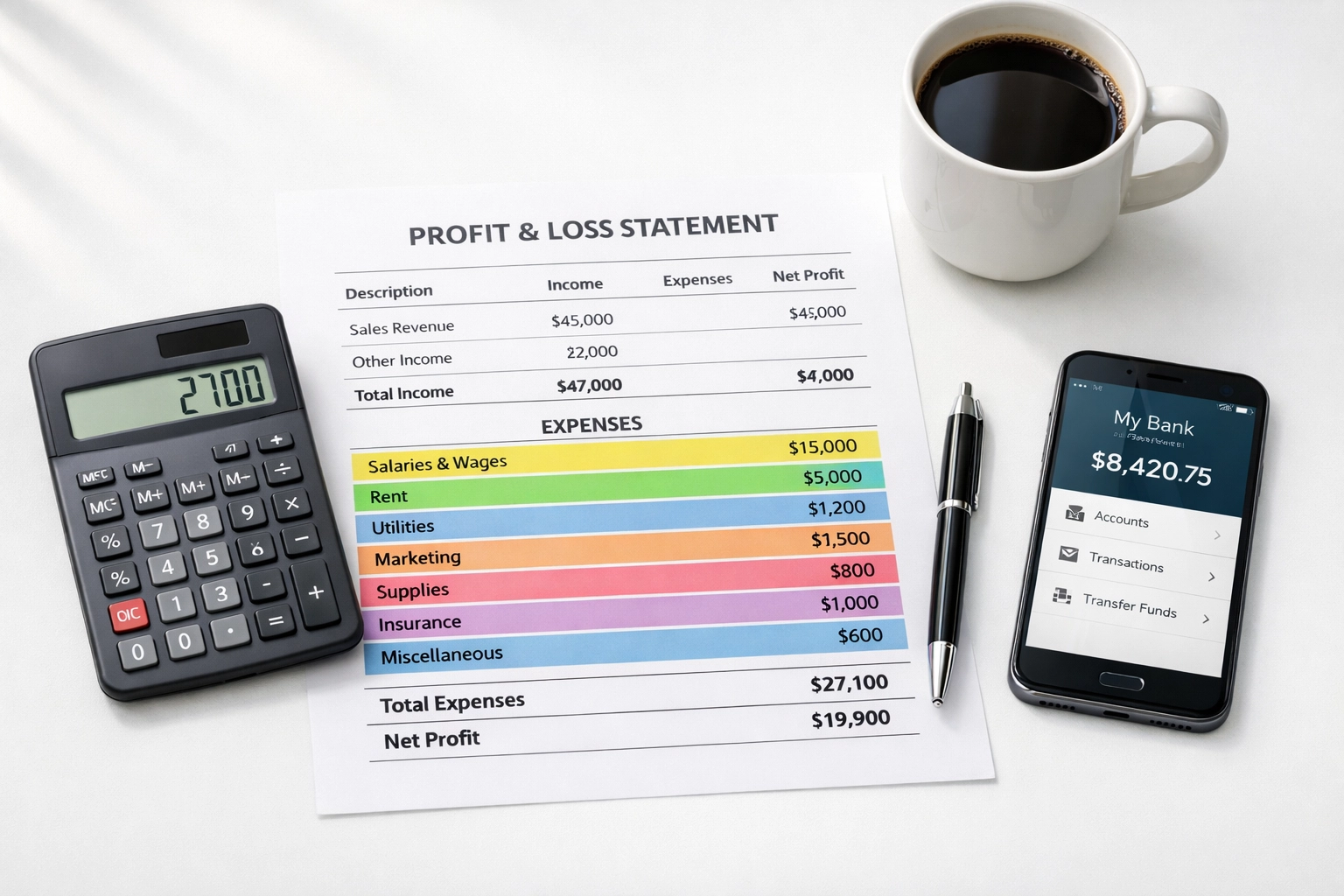
Before we get too deep, let's make sure we're on the same page. A trucking profit and loss spreadsheet (or P&L) is basically your financial scoreboard. It tracks every dollar coming in and every dollar going out, organized in a way that actually makes sense for trucking operations.
The key difference between a regular P&L and what I'm talking about here? Load-specific tracking. Instead of just lumping all your income and expenses together at the end of the month, you're tracking profitability per load. This means you can see which lanes are actually making you money and which ones are secretly draining your bank account.

Think of it like this: if you're running five loads a week and only tracking monthly totals, you might see that you're profitable overall. But you could have two loads that killed it and three that barely broke even, or worse, lost money. Without tracking each load, you'd never know which lanes to avoid and which ones to prioritize.
The 5-Minute Weekly System That Actually Works
Okay, so here's where the rubber meets the road (pun intended). You don't need to spend hours every week buried in spreadsheets. In fact, if your system takes more than 5-10 minutes per week, you're probably overcomplicating it.
Here's the simple weekly routine that keeps your finger on the financial pulse:
Monday Morning (5 minutes):
- Pull up your spreadsheet and enter last week's completed loads
- Input the gross pay for each load
- Enter the major expenses tied to those loads (fuel, tolls, broker fees)
- Let the spreadsheet auto-calculate your net profit per load
That's it. Five minutes, and you know exactly how last week performed. No guessing, no "I think I did okay": just cold, hard numbers.
The beauty of doing this weekly instead of monthly? You catch problems early. If you notice that a particular lane or broker is consistently eating into your profits, you can adjust your strategy immediately: not three months from now when you're wondering why your bank account is lower than expected.
What to Track (The Non-Negotiables)
Not all expenses are created equal, and your trucking profit and loss spreadsheet needs to capture the stuff that actually matters. Here are the categories you absolutely need to track:
Revenue Side:
- Gross pay per load
- Detention pay
- Layover pay
- Any accessorial charges you collected
Expense Side:
- Fuel costs (the big one: usually 25-30% of your gross)
- Truck payment or lease (whether you own or lease, this is fixed)
- Insurance premiums (truck, cargo, liability: all of it)
- Maintenance and repairs (set aside money every week, even if nothing breaks)
- Tolls and permits (those E-ZPass charges add up fast)
- Tires (expensive and easy to forget until you need them)
- Tax obligations (IFTA, UCR, and quarterly estimated taxes)
Pro tip: create a separate line item for "per-mile costs" so you can calculate your true cost per mile. This number is your baseline: any load paying below this is literally costing you money to run.
Why Every Cent Actually Matters
I know what some of you are thinking: "It's just a $50 fuel stop" or "It's only $30 in tolls." But here's the reality check: those small expenses add up to big money over time.
Let's do some quick math. Say you're running 40 loads a year (conservatively), and you're missing $100 in small expenses per load because you're not tracking closely. That's $4,000 in profit that just disappeared. Gone. And you probably didn't even notice because it was nickel-and-dimed away.
The owner-operators who consistently profit: I'm talking the ones pulling in six figures and actually keeping it: are the ones who track every single expense. They know their fuel cost per mile down to the penny. They know exactly what percentage of their gross goes to maintenance. They can tell you their true profit margin without even looking at their spreadsheet because they're that dialed in.
Load-Specific Tracking Changes Everything
Here's where a proper trucking profit and loss spreadsheet really earns its keep: load-level analysis. When you track each load individually, you start to see patterns you'd miss otherwise.
Maybe you realize that loads going into New York City always eat up an extra $200 in tolls and time, making them less profitable than they appear. Or you discover that backhauls from Texas are consistently your most profitable runs because the fuel is cheaper and the rates are strong.
This isn't just interesting information: it's actionable intelligence. You can use this data to:
- Negotiate better rates with brokers based on your actual costs
- Avoid lanes that consistently underperform
- Plan routes that maximize profitability, not just miles
- Make informed decisions about which loads to accept

One of our clients at The Trucker Consultant started doing load-specific tracking and realized he was losing money on nearly 30% of his loads. Just by being more selective about which loads he accepted, he increased his take-home by over $800 per week without running any additional miles. That's the power of actually knowing your numbers.
How The Trucker Consultant Can Help
Look, I get it: spreadsheets aren't everyone's thing. Some of you would rather be behind the wheel than behind a keyboard, and that's fair. The good news? You don't have to do it alone.
At The Trucker Consultant, we offer income and expense tracking as part of our business management packages. We handle the number crunching so you can focus on what you do best: moving freight and growing your business.
Our team sets up customized tracking systems that work for your specific operation, whether you're running one truck or twenty. We monitor your financials in real-time, flag potential issues before they become problems, and provide weekly reports that show exactly where your money is going.
Think of it as having a financial co-pilot who's always watching your six. We've worked with hundreds of owner-operators, and the most common thing we hear is: "I wish I'd started tracking this stuff sooner."
The Bottom Line
Running a profitable trucking business in 2026 isn't about running more miles: it's about running smarter miles. And you can't run smarter if you don't know your numbers.
A trucking profit and loss spreadsheet isn't just a bookkeeping tool: it's your early warning system, your profitability compass, and your reality check all rolled into one. Taking five minutes every week to track where your money goes might not seem like a big deal, but I promise you, it's the habit that separates the operators who are just surviving from the ones who are actually thriving.
So here's my challenge to you: start tracking this week. Every load, every expense, every dollar. Give it a month and then look at the data. I guarantee you'll find at least one thing that surprises you: and that surprise will probably be worth hundreds or thousands of dollars once you fix it.
And if you need help getting started or want someone to handle it for you, reach out to us. We're here to make sure your trucking business doesn't just run( it profits.)